Skip to content

Thermal Imaging & Thermography

See the problems that conventional inspections miss.

Specialist thermal imaging for buildings, industrial assets and electrical infrastructure, using the drone-mounted H30T and professional FLIR handheld cameras, interpreted by Infrared Training Center certified thermographers.

Aerial & Site Services

Temperature tells the story. We know how to read it.

A thermal camera doesn't see water, mould or damage directly. It sees temperature differences. Knowing what those differences mean depends on the time of day, the direction of heat flow and the building's construction. That's where certified interpretation matters. Every finding that matters is verified with a calibrated moisture meter before conclusions are drawn.

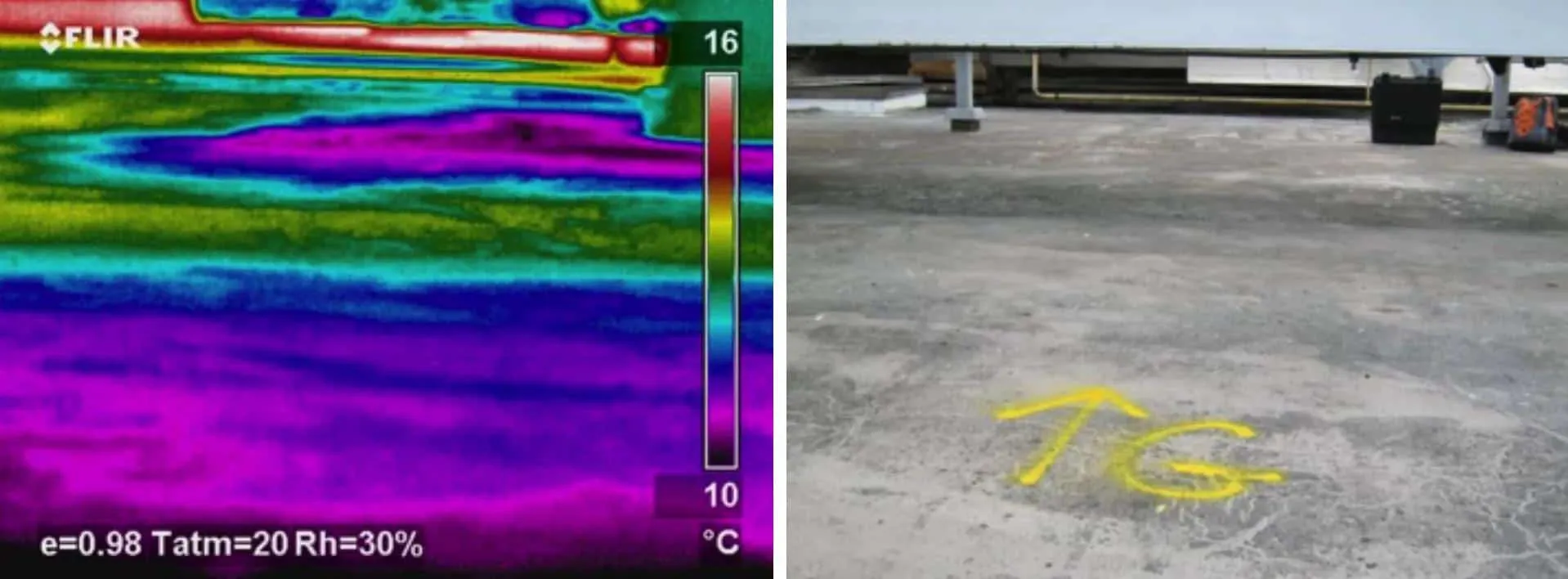
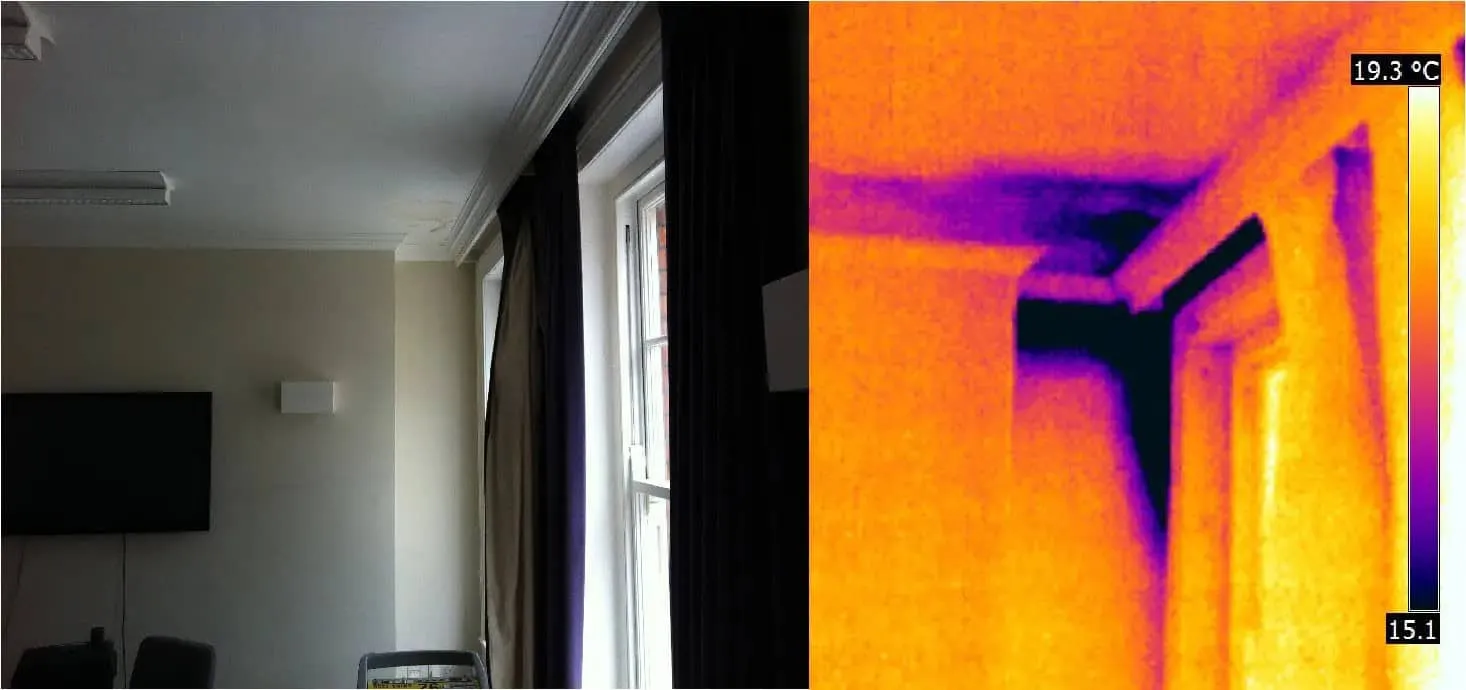
Interior thermal image showing a V-shaped cool zone at a window head indicating hidden moisture

What we offer

01

Building envelope thermography

Interior and exterior scans of walls, ceilings and junctions to find moisture ingress, missing insulation and air infiltration.

  • Window and door junction leaks
  • Roof-to-wall flashing failures
  • Monolithic cladding risk areas
02

Flat roof moisture surveys

Post-sunset aerial surveys when saturated insulation holds heat and shows up as distinct warm patches across the membrane.

  • Whole-roof moisture mapping
  • Targeted core-sample locations
03

Electrical & mechanical

Heat signatures that point to overloaded circuits, failing connections and friction wear, caught before they become failures.

  • Switchboards and connections
  • Motors, bearings and plant
  • Solar arrays (see Solar Panel Inspection)

How it works

A clear process, start to finish.

  1. 01

    Plan for conditions

    Thermal needs a temperature difference of about 10 °C. We schedule for the right season and time of day for your survey.

  2. 02

    Capture

    Aerial H30T and/or handheld FLIR capture, with paired visual images for context.

  3. 03

    Verify

    Anomalies are checked with calibrated moisture meters, because a cold spot is not always a leak.

  4. 04

    Report

    Annotated thermograms, plain-language explanations and prioritised recommendations.

What you receive

Deliverables you can act on.

  • Annotated thermal and visual image pairs
  • Moisture-meter verification readings
  • Plain-language findings and severity ratings
  • Prioritised repair recommendations

Why Drones At Work

Certified thermographers

Infrared Training Center certified, with building and insurance expertise.

Aerial + handheld

The H30T for scale, FLIR handheld for close-range detail and verification.

Verified, not guessed

Thermal shows where to look. Moisture meters confirm the cause.

Who it’s for

Who we do this for

  • Homeowners & buyers

    Especially 1988–2004 monolithic-clad homes, where hidden moisture is the key risk.

  • Property & facilities managers

    Find leaks, heat loss and failing equipment across a portfolio.

  • Insurers & loss adjusters

    Objective evidence of moisture extent and likely source.

From the field

Related case studies

More like this

Testimonials

What clients say

I suspected a roof leak so got these guys to check it out. Was really impressed - the whole process was much faster than waiting for a roofer with a ladder. The team arrived with a flight plan already loaded into the drone which was a nice surprise. Photos they made were very detailed, I could literally see the condition of every join and screw on the roof. They also provided thermal images to check for escaping heat just in case. Thanks to the clear images, they quickly identified that blocked gutter was causing the issue. Highly recommend for anyone wanting a thorough and efficient roof check. Thanks again!

Ivo

Google review · Roof leak inspection

The source of the leak was found as well as a comprehensive review of a 17-year-old roof. Excellent use of technology from both outside (using drone and high-quality imaging) and inside (physical inspection and moisture heat sensing equipment). The source of the leak was investigated and found quickly and a series of solutions provided. I am very satisfied with the job. Thanks Art :)

Residential Building Owner

Roof leak identification

FAQ

Frequently asked questions

When is the best time for a thermal inspection?

You need a temperature difference of at least 10 °C between inside and outside. In New Zealand that's most reliable in winter, or early morning and evening in the shoulder seasons. Flat roofs are surveyed just after sunset.

Can thermal imaging detect water leaks?

It identifies temperature patterns consistent with moisture. Confirmation requires a moisture meter, which we always use.

How should I prepare for an interior inspection?

Keep the building heated overnight and pull back curtains and blinds the night before, so wall corners and window reveals show accurate readings.

Get a free quote

Need a thermal inspection of your property?

Tell us about the building and what you're seeing, and we'll plan the right survey for the conditions.

Hours
Monday – Friday, 8am – 6pm Weekend appointments by request
Based in
Christchurch, New Zealand Serving the South Island, North Island and beyond

We’ll only use your details to reply. Privacy