
What Are You Looking At?
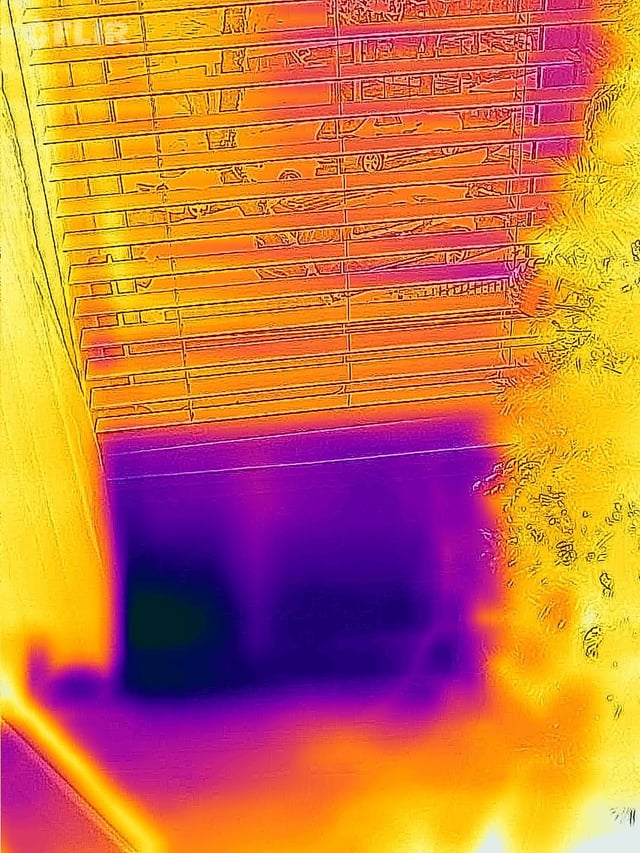
If you’ve received a thermal imaging report, you’re likely looking at a series of colourful images — blues, purples, oranges, and yellows — that resemble a heat map. These images are called thermograms, and they reveal temperature differences across your building.
At Drones at Work NZ, we use advanced drone-mounted thermal cameras and professional handheld systems to inspect roofs, walls, and ceilings. These tools allow us to detect issues that are invisible to standard visual inspections.
This guide will help you:
- Understand what thermal images actually show
- Recognise normal vs abnormal patterns
- Identify common signs of moisture, insulation failure, and air leaks
- Better interpret your inspection report
This guide is structured so you can get the key answers quickly at the top, with a deeper technical explanation further below for those who want to understand the full picture.
Timing Is Everything: Why Hot and Cold Spots Both Matter
The most important thing to understand about your thermal report is that context is everything. An infrared camera does not simply “see” water — it detects surface temperature differences. Whether moisture appears as a hot spot or a cold spot in your images depends entirely on the time of day and the conditions during the inspection.
Morning or Winter Inspections (Heating Season)
When the inside of the building is heated and the outside is cold, moisture typically appears as dark, cool patches. This is due to evaporative cooling — as moisture evaporates from a wet surface, it draws heat away, making that area cooler than the surrounding dry material.
Evening or Post-Sunset Inspections (Cooling Season)
After a warm day, the building begins to cool down. Water has a high thermal mass, meaning it holds onto heat much longer than dry timber or plaster. In this scenario, trapped moisture will appear as bright, warm patches against the cooling dry background. This is especially useful for flat roof surveys, which we always conduct just after sunset for this reason.
The Takeaway: A cold spot is not always a leak, and a warm spot is not always an electrical fault. The time of day and the direction of heat flow are what determine how we interpret the colours. All thermal findings are always verified with a calibrated moisture meter before any conclusions are drawn.
THE BASICS
How Thermal Imaging Works
Thermal cameras do not see moisture, mould, or structural damage directly. They detect surface temperature differences.
These temperature differences are displayed using colour palettes:
- Warm areas = lighter colours (yellow, orange, white)
- Cool areas = darker colours (blue, purple, black)
Two key physical processes make building defects visible:
Evaporative Cooling Moisture absorbs heat as it evaporates, making affected areas appear cooler than surrounding materials.
Thermal Mass (Capacitance) Wet materials retain heat longer than dry ones. After sunset, areas with trapped moisture stay warmer while dry areas cool quickly.
CRITICAL POINT
A thermal anomaly shows a temperature difference — not a confirmed defect.
Thermal imaging identifies where to investigate. Moisture meters confirm the cause.
THE BASELINE
What a Healthy Building Looks Like
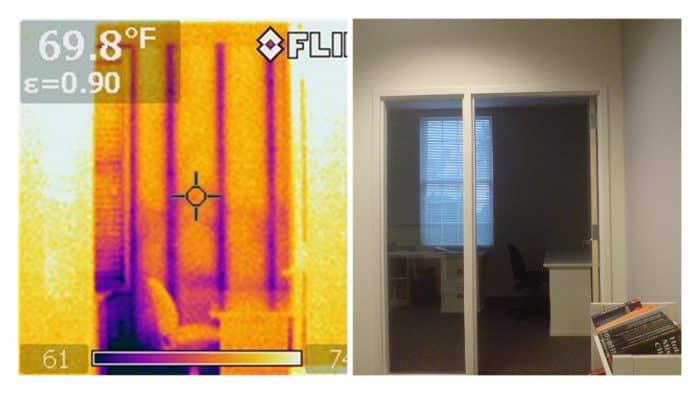
A well-insulated wall typically shows:
- Regular vertical lines (timber framing)
- Even temperature distribution between studs
- Consistent patterns across the wall
MOISTURE INGRESS
The Most Important Issue to Detect
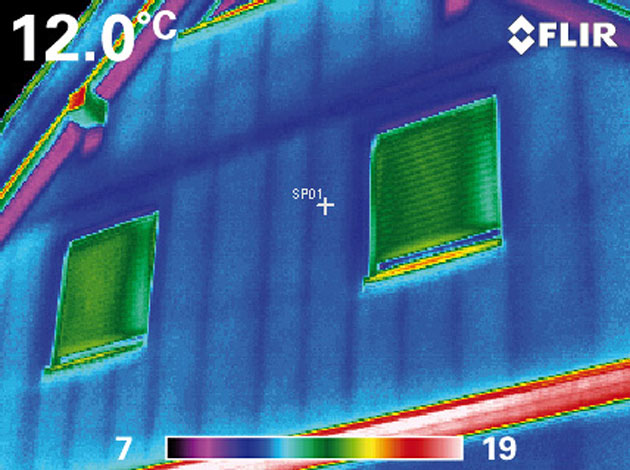
Moisture appears as:
- Irregular, patchy cool areas
- Shapes that do not follow framing lines
- Patterns concentrated around junctions
WINDOW AND DOOR JUNCTIONS
Common Failure Points
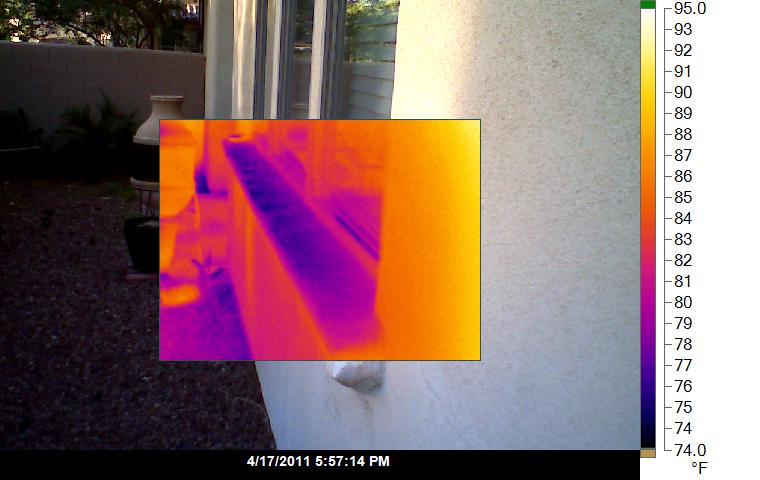
Typical thermal pattern:
- Triangular or fan-shaped cool zones
- Originating at window corners
- Spreading downward
ROOFLINE AND FLASHING FAILURES
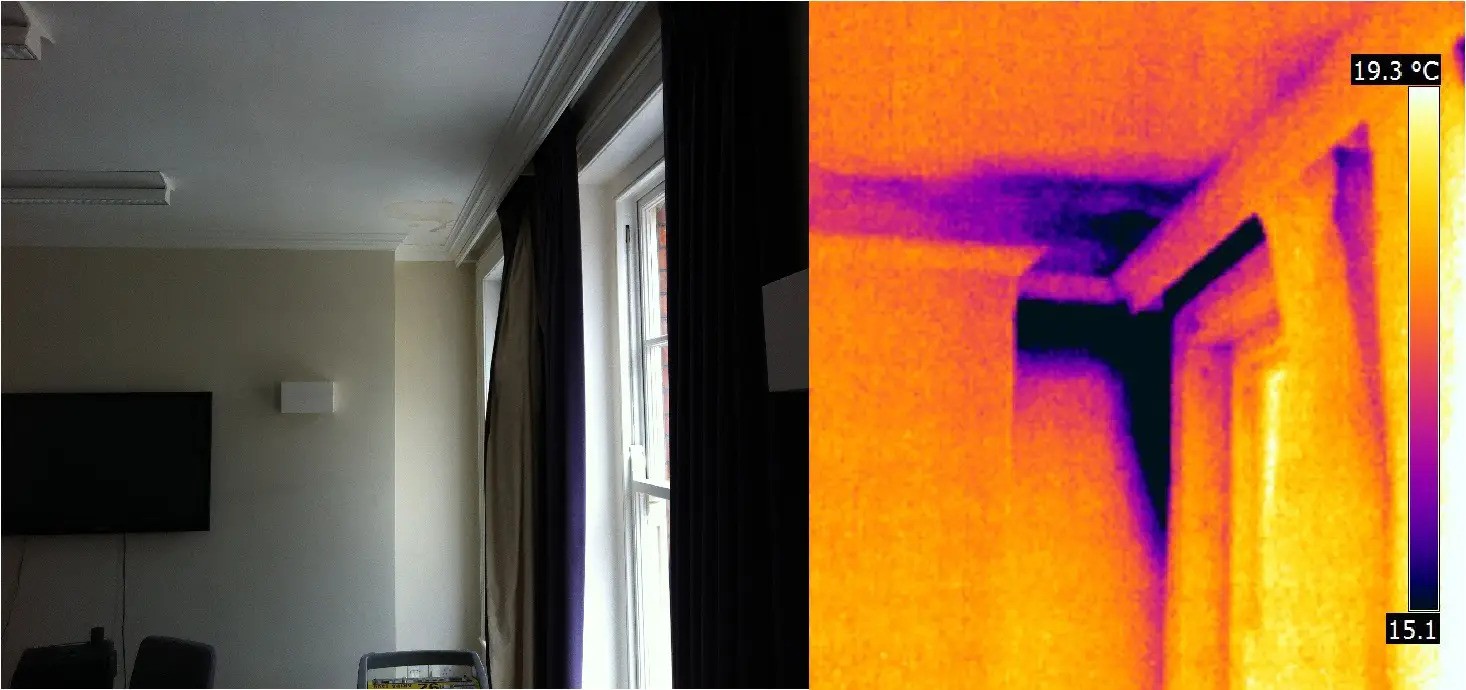
Thermal indicators include:
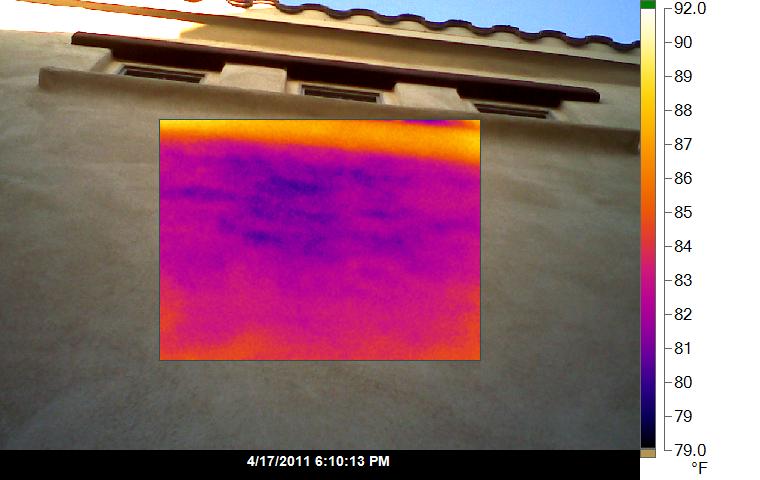
- Broad, mottled cool areas below rooflines
CEILING AND ROOF MOISTURE
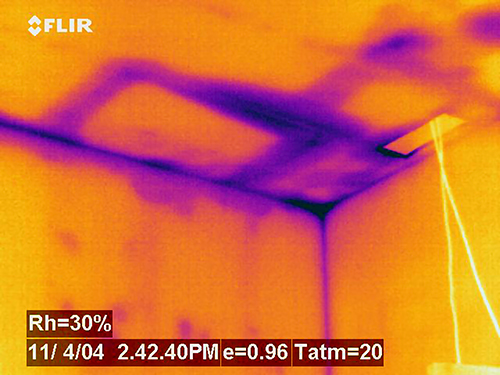
Ceiling moisture appears as:
- Irregular cool patches
Flat Roof Inspections — Post-Sunset Surveys
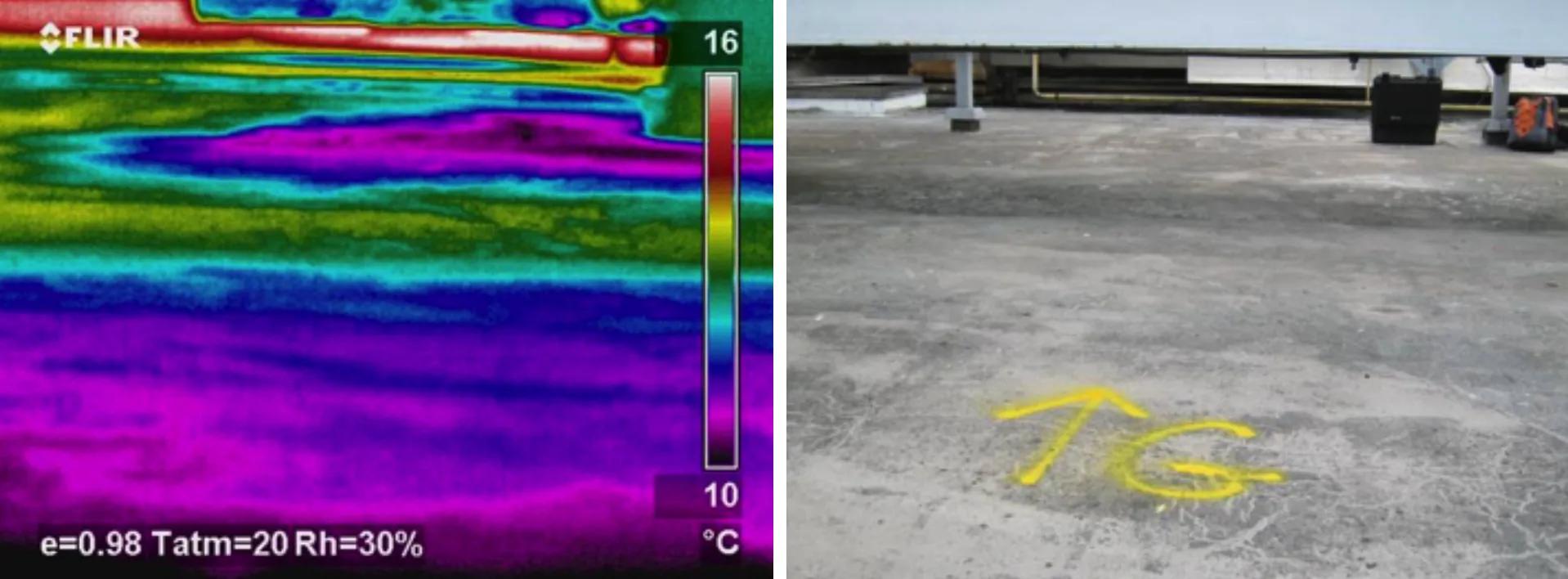
For flat or low-pitch membrane roofs, we conduct thermal surveys just after sunset. During the day, the entire roof absorbs solar radiation equally. After sunset, dry insulation cools rapidly, while areas where moisture has saturated the insulation retain heat much longer. This makes wet areas appear as distinct warm (bright) patches against the cooling dry background — the opposite of what you see on walls during a morning inspection.
AIR INFILTRATION
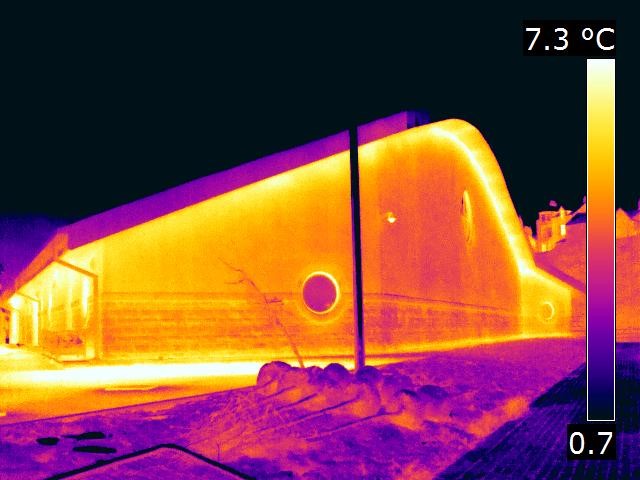
Air leaks create:
- Wispy, streak-like cool patterns
INSULATION DEFECTS
Insulation issues appear as:
- Large rectangular cold zones
QUICK REFERENCE GUIDE
What You See | What It Likely Means | Normal or Investigate? | Time of Day Context |
Regular repeating vertical lines | Normal timber framing (thermal bridging) | ✅ Normal | Any time |
Warm windows | Lower insulation value — expected | ✅ Normal | Any time |
Irregular, patchy cool areas on walls | Possible moisture ingress | ⚠️ Investigate | Morning / heating season |
Irregular, patchy warm areas on walls | Possible moisture ingress (retained heat) | ⚠️ Investigate | Evening / after sunset |
Triangular or fan-shaped cool zone at window corner | Water leaking from window junction | ⚠️ Investigate | Morning / heating season |
Broad mottled cool area below roofline | Flashing or roof-to-wall leak | ⚠️ Investigate | Morning / heating season |
Irregular cool patch on ceiling | Roof or plumbing leak above ceiling | ⚠️ Investigate | Morning / heating season |
Warm patch on flat roof after sunset | Moisture trapped in roof insulation | ⚠️ Investigate | Evening / post-sunset |
Large uniform rectangle between studs | Missing or damaged insulation | ⚠️ Investigate | Any time (more visible in winter) |
Wispy streak-like cool pattern at floor/door | Air infiltration (draft) | ⚠️ Investigate | Heating season |
New Zealand Context: Monolithic Cladding Homes
For homes built between 1988 and 2004 using monolithic cladding systems — including direct-fixed stucco, fibre cement sheet, and polystyrene-based EIFS — thermal imaging is one of the most valuable diagnostic tools available. These systems lack a drainage cavity, meaning any water that penetrates the exterior face becomes trapped directly against the timber framing.
Because the damage is hidden behind the cladding, it can remain undetected for years. By the time visible signs appear (cracking, staining, or soft spots), significant structural damage may already be present. Thermal imaging allows us to identify suspect areas before they reach that stage.
The four highest-risk areas we focus on in these buildings are:
- Window and Door Junctions — Sealant failures here are the most common entry point for water. Thermal images typically show a triangular or fan-shaped cool zone spreading downward from the window corner.
- Roof-to-Wall Flashing — Where the roof meets the wall is a critical junction. Failures here present as broad, mottled cool areas spreading down the wall below the roofline.
- Penetrations — Pipes, meter boxes, vents, and other elements that interrupt the cladding face are common failure points.
- Base of the Wall — Moisture that has tracked down through the wall assembly pools at the base. Rising damp from ground contact can also wick upward into the framing.
FAQ SECTION
What does a thermal image show in a building inspection?
Thermal images show surface temperature differences. These differences can indicate moisture, insulation issues, or air leaks, but they do not confirm defects without further testing.
Can thermal imaging detect water leaks?
Thermal imaging can identify temperature patterns consistent with moisture, but confirmation requires a moisture meter.
What does moisture look like in thermal imaging?
Moisture typically appears as irregular, dark (cool) patches that do not follow structural lines.
Why do windows appear warm in thermal images?
Windows have lower insulation values than walls, so they often appear warmer — this is normal.
When is the best time to do a thermal inspection?
Thermal inspections require a temperature difference (Delta T) of at least 10°C between the inside and outside of the building. In New Zealand, this is most reliably achieved in winter, or during early morning and evening in the shoulder seasons.
For interior wall and ceiling scans, early morning is ideal — the building has been heated overnight and the outside is at its coolest, maximising the temperature differential.
For exterior wall scans, late afternoon to evening works well as the sun has warmed the cladding and the air begins to cool.
For flat roof moisture surveys, just after sunset is best — the roof has absorbed solar heat all day, and as dry areas cool rapidly, any moisture-saturated insulation retains its heat and becomes clearly visible as warm patches.
We also recommend removing curtains and blinds from windows the night before an interior inspection, so that the wall corners and window reveals are exposed to the indoor temperature and show accurate readings.
ABOUT THIS POST
This guide is provided by Drones at Work NZ to help clients understand thermal inspection reports.
Thermal imaging identifies temperature differences — not confirmed defects. All findings should be interpreted alongside professional assessment by licensed building practiciners.
Need a thermal inspection of your property?
Contact us today for a free consultation and quote