
TL;DR — The Short Version
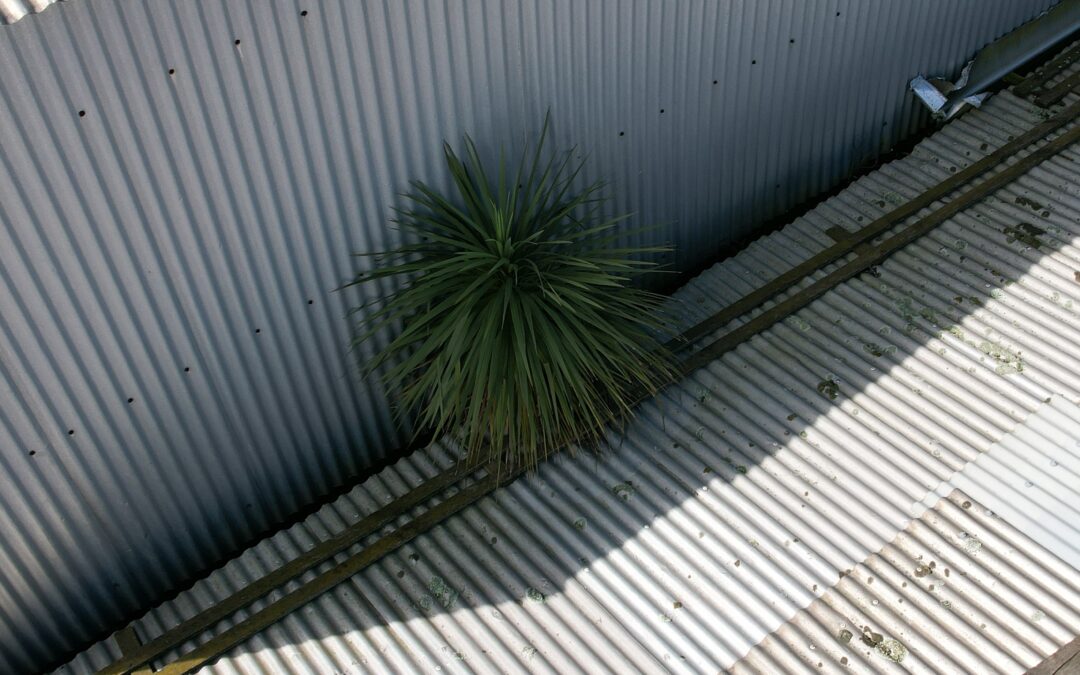
During a routine drone inspection of a commercial warehouse, we discovered a full-grown tree that had established itself in a blocked roof gutter. The root system had pushed through the gutter lining, caused water ingress, and created structural damage — a repair job that ran into thousands of dollars.
Had the building received an annual drone roof inspection, this would have been spotted as a seedling — a five-minute fix rather than a five-figure problem.
Key takeaway: Regular roof inspections aren’t a maintenance cost. They’re insurance against a much bigger bill.
Let me tell you about something we found on a job recently that genuinely surprised even us — and we’ve seen a lot of roofs.
We were doing a drone inspection of a commercial warehouse in New Zealand — a fairly standard job, the kind we do regularly for property managers and building owners. We got the drone up, started reviewing the footage, and there it was. A full-grown plant — we’re talking a proper established tree — sitting in the gutter between two roof sections, completely hidden from anyone on the ground.
The plant itself almost looked impressive, honestly. Bright green, healthy, clearly very happy in its little gutter home. The problem was what was happening underneath it.
So How Does a Tree End Up in a Roof Gutter?
It’s a fair question. The honest answer is: gradually, and completely invisibly from ground level.
A seed blows in — or a bird drops one — and it lands in a gutter that’s already accumulated a layer of leaf debris, dirt, and organic matter. That debris is basically potting mix at that point. The seed germinates, the roots follow moisture, and within a season or two you’ve got a seedling. Within a few years, if nobody’s been up to check, you’ve got what we photographed: a plant large enough that its root system has started working its way through the gutter joins and into the roof structure below.
This warehouse had clearly not had a proper roof inspection for several years. Nobody had done anything wrong, exactly — there just wasn’t a regular inspection programme in place. The roof looked fine from the carpark. It always does, until it doesn’t.
What the Damage Actually Looked Like
By the time we found the tree, the damage had already moved well beyond “just a blocked gutter”. Here’s what we documented:
- The gutter lining had been compromised by root penetration at multiple points along the join
- Water was being redirected against the wall cladding rather than draining correctly, with visible staining on the exterior
- Thermal imaging showed moisture present beneath the roof membrane in two locations near the gutter run
- There was evidence of water ingress tracking into the interior ceiling space
- The gutter itself would require full replacement in the affected section rather than a simple clean and reseal
The repair cost? We’re not going to put a number on it because every building is different, but it was significantly more than the building owner was expecting — and significantly more than it would have been at any earlier point in that plant’s life.
Why This Kind of Thing Goes Unnoticed for So Long
Here’s the frustrating reality of commercial roof maintenance in New Zealand: most building owners and property managers only think about the roof when something goes wrong inside the building. A water stain on a ceiling tile. A drip during heavy rain. A damp smell in a corner.
By the time those signs appear, the damage has been building for months — sometimes years. The leak you can see is never where the problem started. Water travels, and by the time it’s visible to you, it’s already moved through insulation, framing, and ceiling linings to get there.
The other problem is access. Getting a person onto a commercial roof safely requires scaffolding, safety harnesses, and proper planning. It’s not something you do casually, and so it doesn’t happen as often as it should. Even when someone does go up, they’re walking the roof surface — they’re not seeing the gutters, the joins, and the hidden valleys from above the way a drone does.
What a Drone Inspection Actually Shows You
We use DJI M350 RTK drones with H30T thermal sensors and high-resolution cameras. What that means in plain language is that we can show you:
- Every metre of your gutters, ridgelines, valleys, and flashings in high resolution — from angles a person on the roof simply cannot reach
- Moisture trapped beneath the roof surface, invisible to the naked eye, using thermal imaging that detects temperature differences caused by wet insulation and membranes
- Vegetation growth, debris accumulation, cracked or lifting roof sheets, failing sealant around penetrations, and deteriorating flashings
- Precise measurements and 3D modelling where needed for repair planning or insurance documentation
And we do all of that without scaffolding, without anyone walking on your roof, and without disrupting your business operations. We turn up, fly the inspection, and have a detailed written report with annotated imagery back to you quickly.
The tree we found in that warehouse gutter? It showed up on our first pass. Immediately visible from above in a way it never would have been from the carpark, from a ladder at the eaves, or from inside the building.
How Often Should a Commercial Roof Be Inspected?
The honest answer is: more often than most are. As a general guide:
- Annual inspections as a minimum for commercial and industrial buildings
- After any significant weather event — heavy rain, hail, high winds
- Before and after winter, when debris accumulation is highest and drainage is most critical
- Prior to any insurance renewal or property transaction where condition documentation is required
- Any time you notice something inside the building that might indicate a roof or water issue
The cost of an annual drone inspection is a small fraction of what a single significant leak remediation costs — let alone the kind of structural damage that comes from years of undetected water ingress.
A Note on Insurance
Something worth knowing if you manage commercial property: insurers are increasingly asking about maintenance records when assessing claims related to roof and water damage. If a claim arises from damage that could reasonably have been identified and prevented through routine maintenance, you may find your insurer has questions.
An inspection report from Drones At Work is dated, detailed, and photographic — it documents the condition of your roof at a point in time. For property managers and building owners, that kind of documentation has real value when a claim needs to be supported or defended.
If You’re Not Sure What’s on Your Roof, That’s Worth Finding Out
We’re based in Christchurch and work with building owners, property managers, insurers, and civil contractors across all of New Zealand. If your building hasn’t had a proper roof inspection recently — or ever — we’re happy to have a no-obligation conversation about what’s involved.
It probably won’t be a tree. But there might be something up there you’d want to know about.
Get in touch:
📞 0800 DRONES (0800 376 637)
🌐 dronesatwork.nz
Written by the team at Drones At Work — CAA Part 102 Licensed drone operators serving New Zealand nationwide.
Is Your Roof Overdue for an Inspection?
We serve commercial, industrial, and residential clients across all of New Zealand — from Christchurch to Auckland and everywhere in between. Get in touch today and we’ll have a quote back to you fast.